Most companies are still treating hybrid work as a compromise rather than a high-level business strategy. In the current landscape, you likely see half-empty floors on Fridays and a chaotic scramble for meeting rooms on Tuesdays. This inefficiency is not just a minor nuisance; it is a direct drain on your high-performers. When employees commute for an hour only to sit on video calls in a noisy open-plan office, they feel disrespected. To solve this, leadership must understand how to organize a hybrid office for maximum productivity in 2026 by treating the physical workspace as a high-performance tool rather than just a place of work.
The honeymoon phase of “work from anywhere” ended years ago. In mid-2026, the standard for excellence has shifted. It is no longer about just providing a desk; it is about creating an environment that justifies the commute. If your office does not offer a superior experience to a home setup, your hybrid work model is failing. The solution requires a radical shift toward intentional spatial design, AI-driven scheduling, and a hard pivot away from the outdated “assigned desk” era.
1. Shift to Activity-Based “Neighborhoods”
The traditional departmental floor plan is dead. Marketing does not need to sit together 100% of the time; people doing collaborative work need to sit together. In 2026, the most productive offices utilize “Neighborhoods” grouped by the type of energy and focus required. This workplace management strategy ensures that the environment matches the task at hand.
- The Deep Work Zone: Library-style rules. No talking, no phones, and physical partitions that block peripheral vision. This is where the heavy cognitive lifting happens.
- The Collaboration Arena: Moveable furniture, digital whiteboards, and high-fidelity audio for seamless remote collaboration with off-site participants.
- The Social Anchor: A high-end kitchen or lounge area where “accidental” innovation happens. This should be the only place where loud conversation is encouraged.
2. Deploy Predictive Spatial Orchestration
Static office management is a relic of the past. Using advanced platforms like Slayly, forward-thinking operations managers now use real-time data to predict occupancy patterns. Much like how digital marketers ask, “Can AI SEO tools help with technical SEO issues?” to find hidden site bottlenecks, modern facilities managers use AI to identify spatial bottlenecks before they frustrate the staff.
Instead of guessing how many desks you need, Slayly analyzes historical attendance, project deadlines, and even local traffic patterns to suggest the optimal configuration for the week ahead. This level of precision allows you to close down entire floors during low-occupancy days, drastically reducing overhead costs while ensuring that the “active” floors feel vibrant and energized rather than empty and depressing. For smaller firms, this efficiency is vital; while many ask “Does AI help with local SEO for small businesses?” to drive external growth, using AI for internal spatial orchestration drives the productivity needed to sustain that growth.
3. Solve the “Hybrid Meeting” Friction
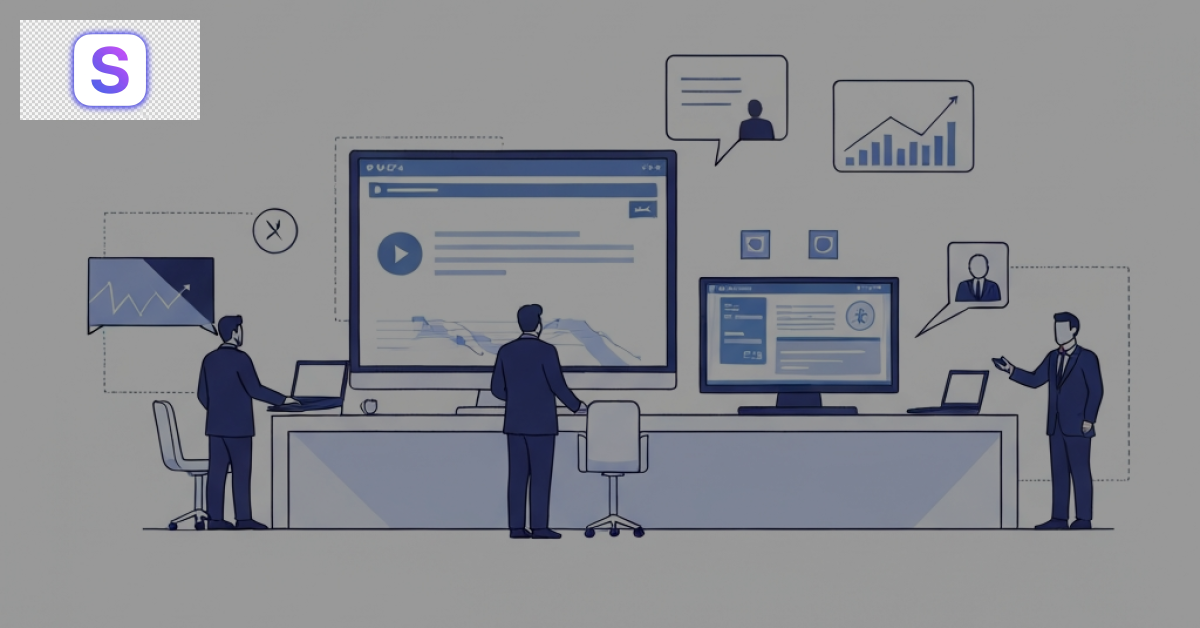
Nothing kills momentum faster than a meeting where the remote participants feel like second-class citizens. By 2026, “Hybrid Equity” is the benchmark for flexible workspace design. This means every meeting room must be equipped with 360-degree cameras and spatial audio to bridge the gap between physical and digital presence.
Stop using long rectangular tables. Use “D-shaped” or semi-circular layouts where the screen is at the head of the table. This ensures that every person in the room is facing the remote team members, creating a unified presence. If your tech stack does not allow a remote worker to feel like they are sitting at the table, you are better off staying fully remote for that specific session to maintain employee engagement.
4. The Sensory Environment: Beyond Aesthetics
Productivity is a biological function. If your office lighting is still harsh fluorescent and your acoustics are “echo-chamber chic,” your team is likely suffering from cognitive fatigue by 2:00 PM. High-performance offices now treat the environment as a biological catalyst.
Invest in circadian lighting systems that adjust color temperature throughout the day to match natural sunlight. Pair this with active sound masking—not just white noise, but biophilic soundscapes that are proven to reduce stress markers. These are not luxuries; they are performance enhancers that high-value talent now expects as a baseline in any modern office layout.
Frequently Asked Questions
How do I handle the “Friday Ghost Town” syndrome?
Stop trying to force Friday attendance. Instead, lean into the data provided by Slayly to consolidate your team into a smaller, more energetic footprint on low-attendance days. Use Fridays for asynchronous deep work and save the high-energy, in-person workshops for your “Anchor Days” (typically Tuesday through Thursday).
Is hot-desking still effective in 2026?
Only if it is “Hot-desking 2.0.” The 2022 version—where people wandered around looking for a plug—was a failure. The 2026 version involves precision booking. Employees should know exactly where they are sitting, who they are sitting near, and have their ergonomic preferences saved via an app before they even leave their house.
What is the ideal ratio of desks to employees?
For most high-growth firms in 2026, a ratio of 1 desk for every 2.5 employees is the sweet spot. This assumes you have invested heavily in diverse workspaces like phone booths, huddle rooms, and lounge areas. If you have more desks than that, you are likely paying for “dead air” that kills the office atmosphere.
How do we maintain culture with a hybrid model?
Culture is built through shared wins and clear communication, not ping-pong tables. Use the physical office for “High-Stakes Moments”—onboarding, creative brainstorming, and difficult feedback sessions. When the office is reserved for high-value interactions, the culture strengthens naturally because the time spent together feels purposeful.
Conclusion
The transition to a permanent hybrid world doesn’t have to be a source of friction. By focusing on activity-based zones, sensory optimization, and predictive data, you can turn your physical headquarters into a competitive advantage. Ultimately, mastering how to organize a hybrid office for maximum productivity in 2026 requires a blend of human-centric design and data-driven management to ensure your team thrives regardless of where they log in.